
The Women of Exodus: Shiprah and Puah
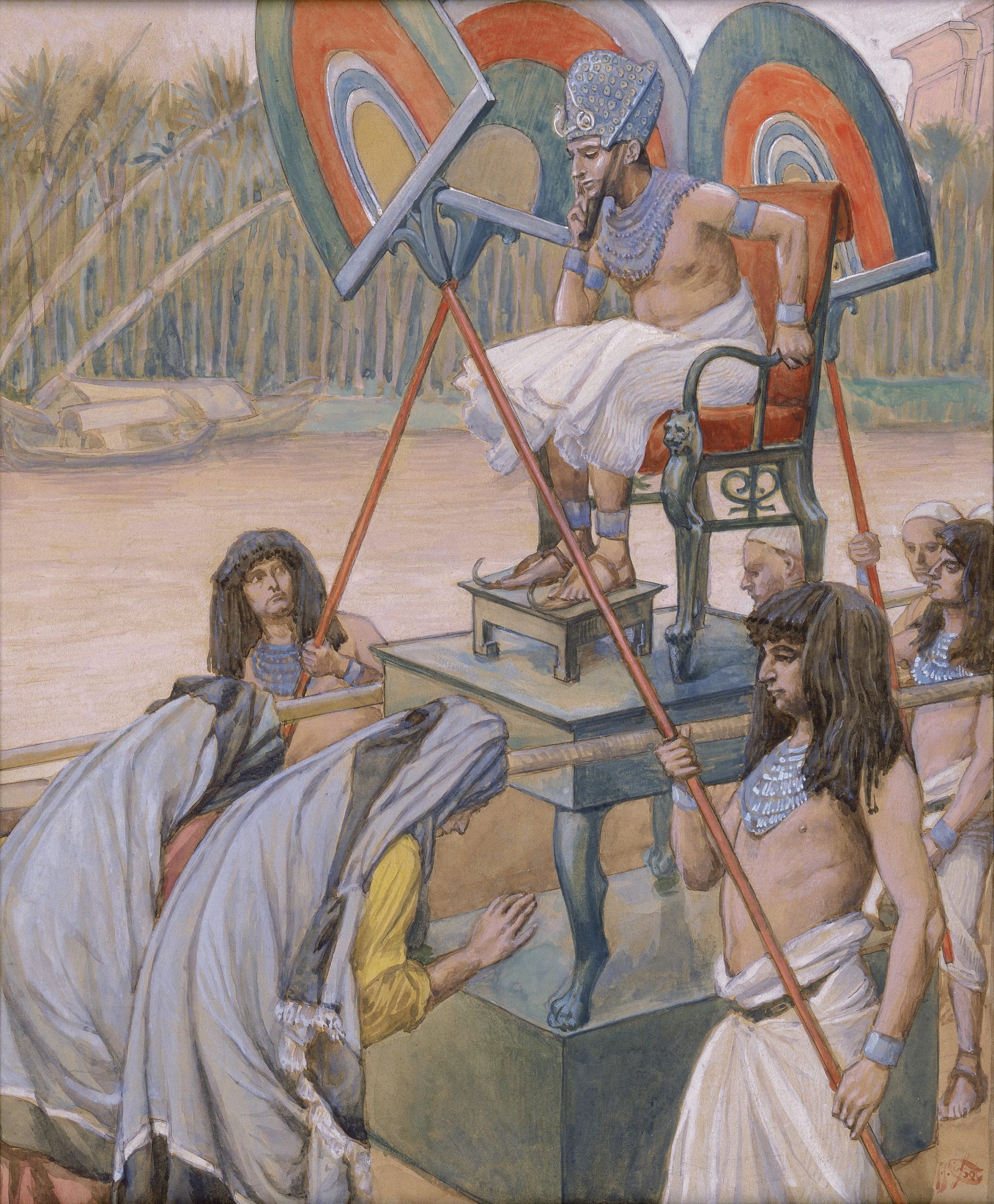
In the Exodus account, the first act of resistance against the evil pharaoh's decree to kill all Hebrew newborn boys was by Shiprah and Puah, Hebrew midwives. It is significant that these two women are named but the pharaoh is left nameless. "The midwives, however, feared God and did not do what the king of Egypt had told them to do; they let the boys live" (Exodus 1:17). Their subversive actions resulted in the Hebrew population continuing to grow even under duress. When summoned by the pharaoh in anger, they appeared, as seen in the illustration. He demanded to know why the baby boys still lived. They answered that the Hebrew women were strong and gave birth before they arrived. Because of their bravery and fear of the LORD, God blessed Shiprah and Puah and gave them families of their own. (Exodus 1: 15-21)
In the Exodus account, the first act of resistance against the evil pharaoh's decree to kill all Hebrew newborn boys was by Shiprah and Puah, Hebrew midwives. It is significant that these two women are named but the pharaoh is left nameless. "The midwives, however, feared God and did not do what the king of Egypt had told them to do; they let the boys live" (Exodus 1:17). Their subversive actions resulted in the Hebrew population continuing to grow even under duress. When summoned by the pharaoh in anger, they appeared, as seen in the illustration. He demanded to know why the baby boys still lived. They answered that the Hebrew women were strong and gave birth before they arrived. Because of their bravery and fear of the LORD, God blessed Shiprah and Puah and gave them families of their own. (Exodus 1: 15-21)
Title of Art: Pharaoh and the Midwives
Subjects: Hebrew midwives Shiprah and Puah, Pharaoh
Artist: James Jacques Joseph Tissot
Art Form: Illustration
Date of Composition: c. 1896-1902
Event: Women of Exodus
Exhibit Institution: The Jewish Museum
Exhibit Location: New York, New York
VM Image #: 228
Download:
Full View:
No related pages found in the same category.