
Samaritan Woman
John 4: 1-42
John 4: 1-42 tells the account of the Samaritan woman, the “Woman at the Well.” The longest dialogue in John occurs between her and Jesus, and it is a deeply theological exchange. She becomes the first person in John’s gospel to whom Jesus reveals himself as “I AM” (4:26). The Samaritan woman emerges as the first evangelist who brings others to believe in him (4:39). Even though Scripture clearly describes these events, the Samaritan Woman’s story has been defamed and disregarded throughout the history of the church. Looking more closely at the text, a different story unfolds, proclaiming her a faithful and inspirational disciple of Christ.
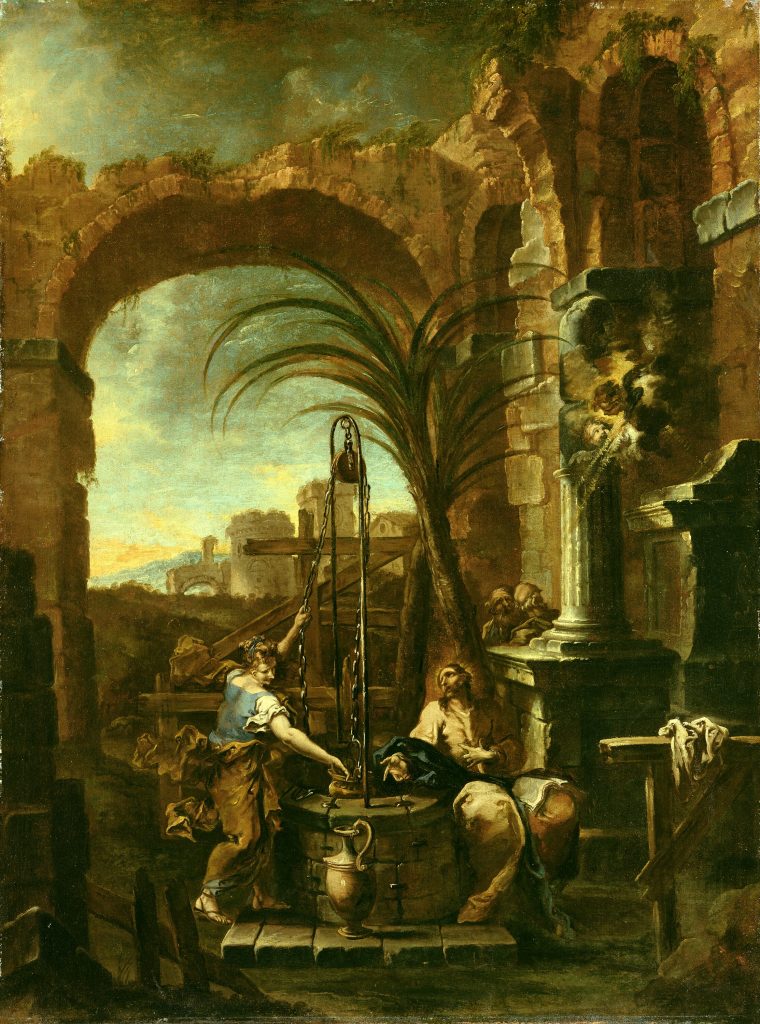
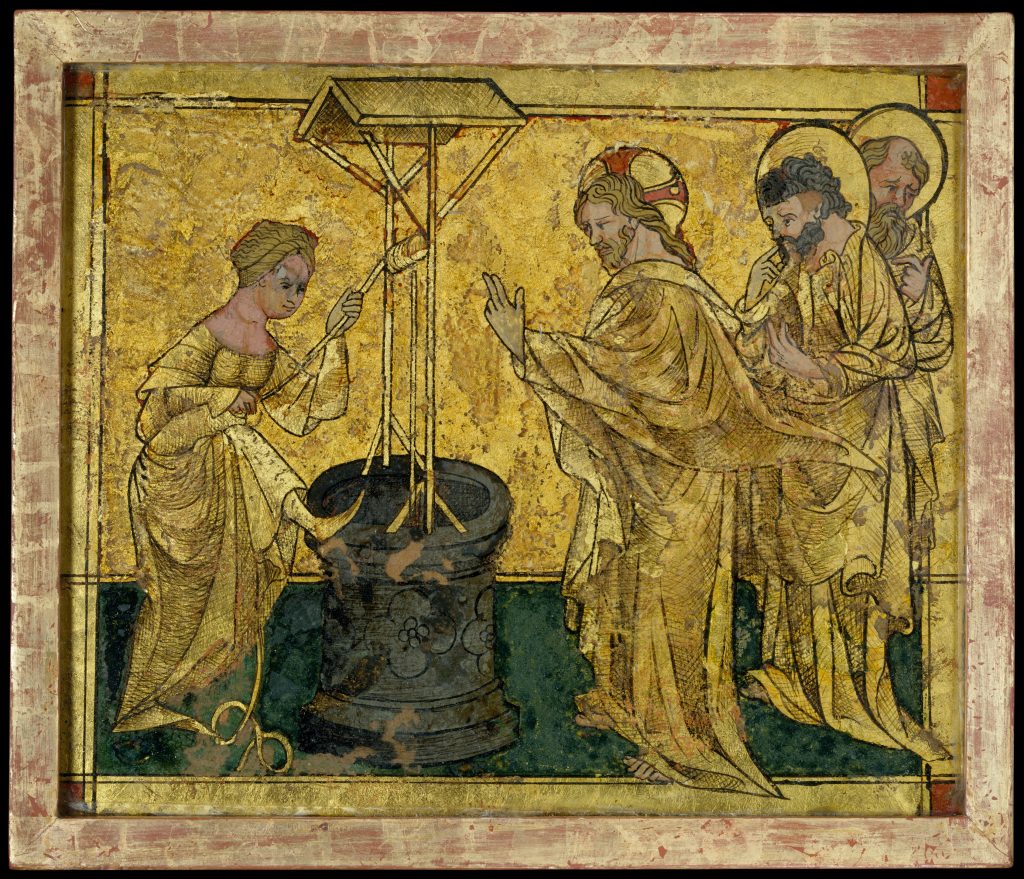

A Samaritan woman came to draw water, and Jesus said to her, “Give me a drink.” The Samaritan woman said to him, “How is it that you, a Jew, ask a drink of me, a woman of Samaria?” Jesus answered her, “If you knew the gift of God and who it is that is saying to you, ‘Give me a drink,’ you would have asked him, and he would have given you living water.”The woman said to him, “Sir, you have no bucket, and the well is deep. Where do you get that living water? Are you greater than our ancestor Jacob, who gave us the well and with his sons and his flocks drank from it?” Jesus said to her, “Everyone who drinks of this water will be thirsty again, but those who drink of the water that I will give them will never be thirsty. The water that I will give will become in them a spring of water gushing up to eternal life.” The woman said to him, “Sir, give me this water, so that I may never be thirsty or have to keep coming here to draw water.
Jesus said to her, “Go, call your husband, and come back.” The woman answered him, “I have no husband.” Jesus said to her, “You are right in saying, ‘I have no husband,’ for you have had five husbands, and the one you have now is not your husband. What you have said is true!” (4:7-18)
The prevailing narrative has assumed the Samaritan woman as sexually immoral and an outcast in her community. On closer reading of the text, accompanied with an effort to understand the historical and cultural context of the passage, a different story emerges. The maligning of this woman’s character arises from focusing on the wrong part of the story and not continuing through the narrative to discover the greater meaning of the entire account. As the woman carries on a theological discussion with Jesus, she immediately recognizes him as a prophet due to his knowledge of her past and present circumstances. Jesus is not chastising her; he is demonstrating who he truly is. He never calls her to repentance. In her context, women had no agency in getting married or divorced. Perhaps she divorced once or twice, possibly not voluntarily, and experienced the tragic loss of some of her husbands. Her current situation implies she may be a concubine for the man Jesus mentions as “not her husband.” Jesus recognizes her pain. The text reveals that later, numerous people in the town believed her words about Jesus being the Messiah, which speaks to her not possessing an illicit reputation. Even “reputable” women were not often accepted as credible witnesses. The people of Samaria accepted her testimony and followed her back to meet Jesus.
Just then his disciples came back. They marveled that he was talking with a woman, but no one said, “What do you seek?” or, “Why are you talking with her?” So the woman left her water jar and went away into town and said to the people,“Come, see a man who told me all that I ever did. Can this be the Christ?” They went out of the town and were coming to him. (4:27-30)
Many Samaritans from that town believed in him because of the woman’s testimony, “He told me all that I ever did.” So when the Samaritans came to him, they asked him to stay with them, and he stayed there two days. And many more believed because of his word. (4:39-41)
The Samaritan woman believes Jesus and immediately goes and tells others. She models what it means to be a disciple who saw the fields were ripe for harvest (4:35). Her recognition of Jesus as Messiah and faithful discipleship in action to share the Gospel stands in contrast to the absence of action by Jesus’s disciples in this passage. They miss the opportunity of the harvest while being preoccupied with procuring lunch. When they find Jesus deep in conversation with this woman they are “astonished” (4:27). After the Samaritan women departs to share the Gospel, Jesus admonishes his disciples for misunderstanding the “food” of most importance to him is to do his will and work toward the harvest of souls for the kingdom. The Samaritan Woman’s story provides an example of a woman who was not afraid to ask Jesus tough, theological questions. Her story displays faith seeking understanding and understanding blossoming into belief and action.
Hagiography: Both the Greek Orthodox and Armenian Orthodox Church celebrate the woman at the well as Saint Photini. They trace her movement to Carthage, where she was baptized and honored with the name Photini, meaning “the enlightened one.” She continued to preach the Gospel and catechized many. She moved to Rome with her family where Nero arrested them for preaching the gospel. The accounts of her torture and death differ in minor ways, but are both full of God acting miraculously to keep her alive, bringing more people to Christ. The Greek account entails Nero ordering her to be thrown into a well, where she surrendered her soul to Christ. The symbolism of her death in a well speaks to her receiving the true, everlasting, living water in a similar setting to where she originally met Jesus and believed. There are numerous churches and shrines dedicated to her in the East.
Printable Devotion: The Samaritan Woman
Resources:
- Holly J. Carey. Women Who Do: Female Disciples in the Gospels, Eerdmans, 2023.
- Lynn Cohick, “The Samaritan Woman: A Theologically Astute, Faithful Evangelist, The Center for Women in Leadership Substack, 08 January 2026.
- Edward Matthews, On This Day, Gorgias Press, 2022
- Scot McKnight, John, Everyday Bible Study, Harper Christian Resources, 2022.
- “Martyr Photini the Samaritan Woman, Her Sons, and Those with Them.” Accessed January 24, 2026. https://www.oca.org/saints/lives/2013/03/20/100846-martyr-photini-the-samaritan-woman-her-sons-and-those-with-them.