
Tamar
Genesis 38
Tamar is one of the five women mentioned in the genealogy of Christ in the first chapter of Matthew, yet her story is often misunderstood or glossed over in sermons. The account of Judah and Tamar is told in Genesis 38. It is not an easy section to read, but like all Scripture, has important lessons to teach us about the character of God and how he advances his purposes in the lives of human beings. Tamar’s seemingly scandalous story offers clues warranting a deeper consideration of the context and a purposeful examination of the reality that although her story includes the word “prostitute,” she is the character proclaimed righteous in the end.
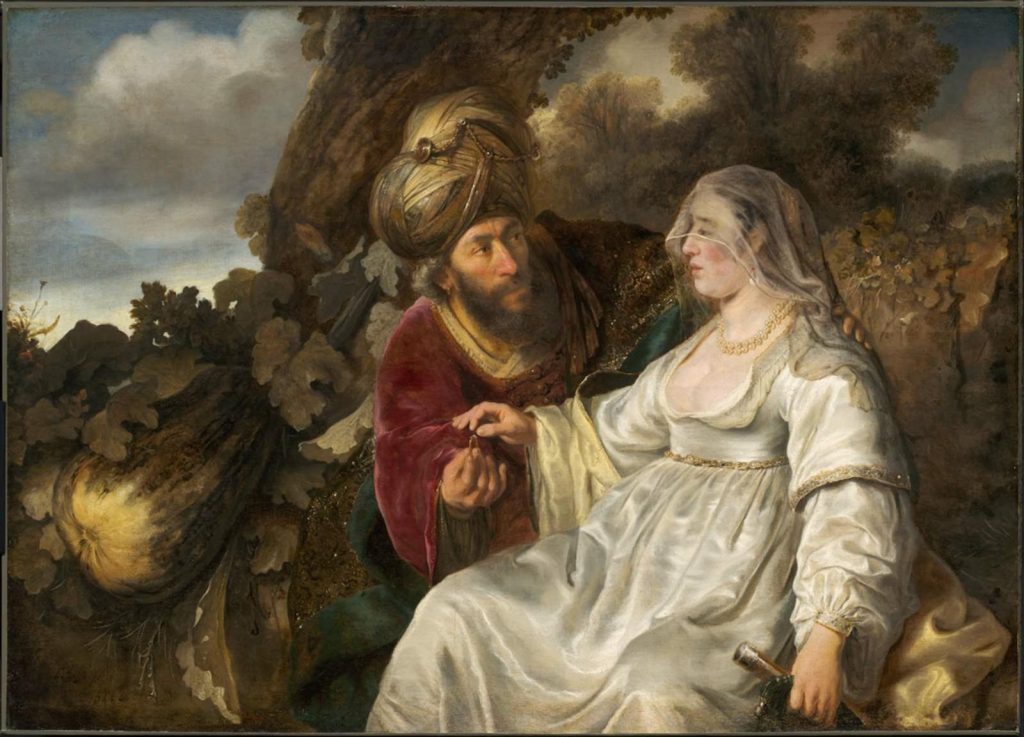
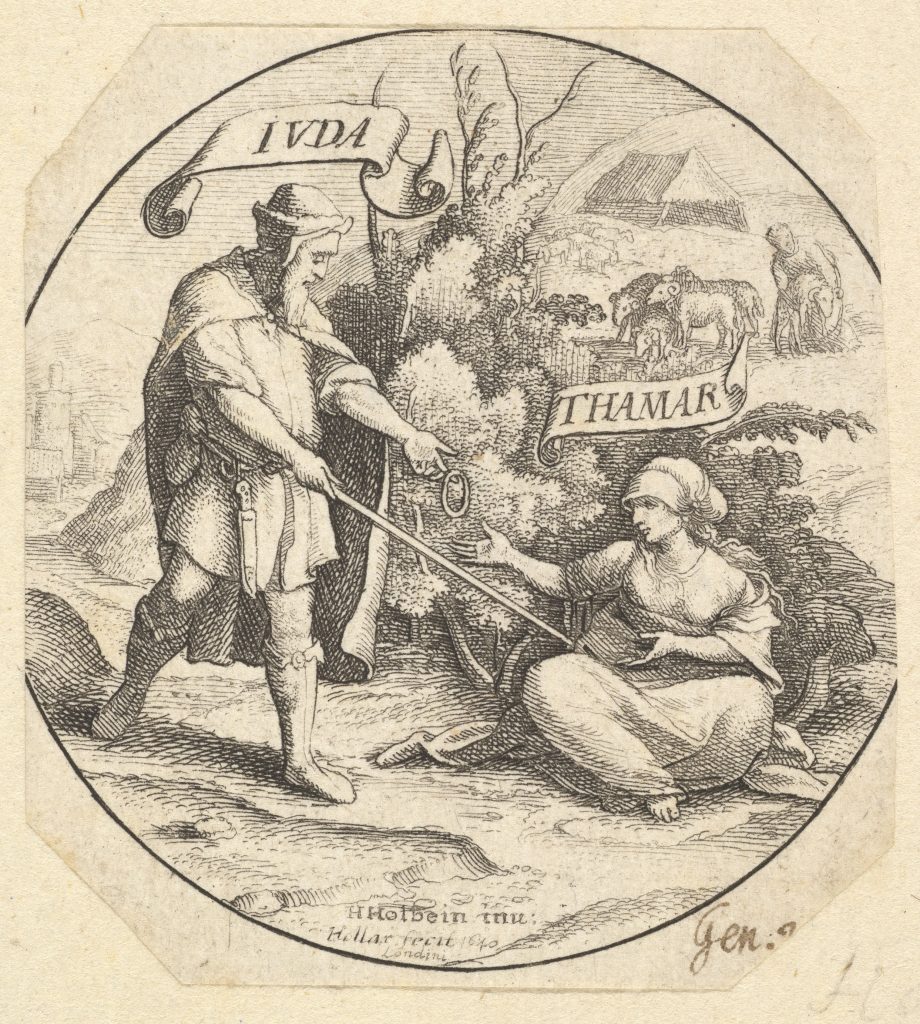
It has often been assumed that Tamar engages in sexual sin, but that is not what the passage narrates. Genesis 38 interrupts the story of Joseph and his brothers. One of the brothers who assists in selling Joseph into slavery is Judah. The beginning of the chapter informs us that Judah moves away from his brothers, the sons of Israel, to a foreign land to live in Gentile territory. He marries a forbidden Canaanite woman, and they bear three sons. Tamar is introduced when Judah “got a wife” for his eldest son, who God soon puts to death due to his wickedness. This is the first time Scripture relays God killing a person. As was customary in levirate marriage practices (Deut. 25:5-10), Judah offers his second son to produce offspring with Tamar so she would have an heir for her deceased husband and be taken care of, but he refused. The Lord puts him to death as well. Tamar is childless and twice widowed, which is a dangerous position for a woman of this time. Judah views Tamar as bad luck and dishonorably sends her back to her father’s house, but promises Tamar his third son when he is of age. Widows relied on help from others to provide basic needs and were often society’s poorest members.
After what Scripture describes as a “long time,” Judah’s wife dies, and Tamar realizes that he is not going to hold up his end of the bargain. She decides to take her well-being into her own hands and procure the provision denied by her father-in-law. Tamar removes her widow’s garments, dons a veil, and sits along the road Judah will be traveling to shear his sheep. Judah assumes she is a prostitute since her face is covered and asks to sleep with her, pledging a young goat as payment in the future. Tamar requests a pledge to guarantee payment and persuades Judah to provide items that clearly indicate his identity— his seal, cord, and staff. The seal was either a signet ring or a cylindrical seal, and the cord was worn around the neck to hold the seal. A staff indicated the head of a clan and was personalized and recognizable.
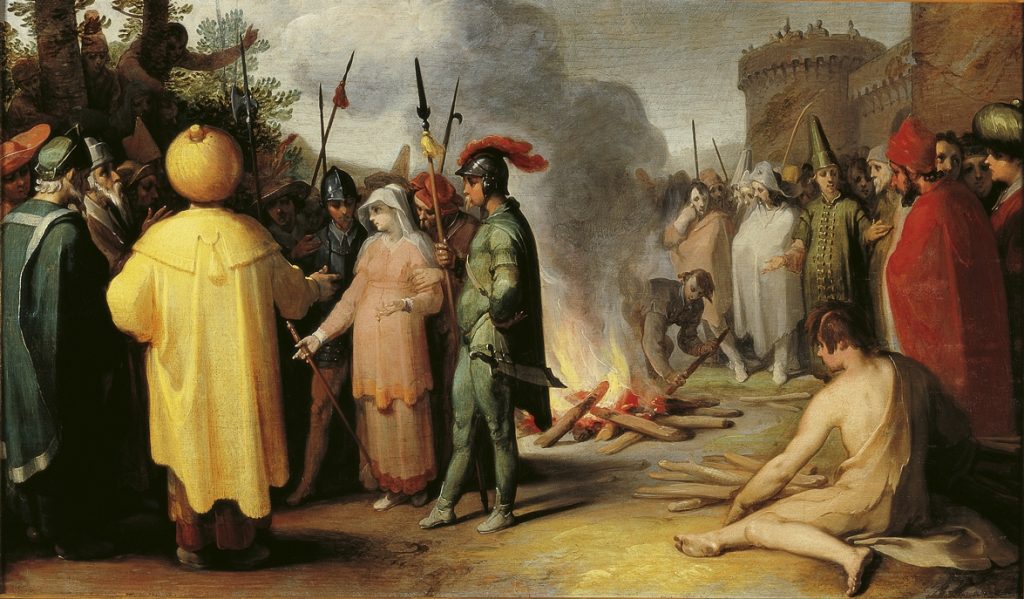
Tamar becomes pregnant from the encounter and returns to her widow’s clothes. Judah sends his friend to find the woman and provide the goat price. He inquires about the local shrine prostitute, and the locals reveal there isn’t one. Judah decides to stop looking and let her keep his personal identity markers to protect his own reputation. Months later, word arrives to Judah that his unmarried daughter-in-law is pregnant and guilty of prostitution. Because she was a widow, it would have been assumed she used prostitution to support herself. Judah hypocritically demands she be brought out and burned to death. The chasm separating a man with social status and an accused prostitute could not be clearer.
As Tamar is ushered to her execution, she sends a message to Judah announcing she has items that identify the man who slept with her. The items are Judah’s seal, cord, and staff. He is found to be the dishonorable one and pronounces, “She is more righteous than I, since I would not give her to my son Shelah.” Judah realizes there are consequences for not considering the well-being of others under his care. Dr. Sandra Glahn comments that his words truly mean, “You’re the one in the right here, not me.” This does not mean she is less guilty; this means she is entirely righteous and he is wholly wicked. This foreshadows a new type of righteousness that turns upside-down the expectations of guilt and innocence. Justice is granted to the marginalized and mistreated. Months later, Tamar is blessed with twin sons, and one of them is found in the genealogy of Christ.
Tamar’s situation was difficult. It is hard for us to understand the choice she made because we are so far removed from her cultural situation. Her actions were the only way she could take back her agency over a powerful man who had not followed the law. This event begins a transformation in the heart of Judah, who will return to his brothers and offer his own life to protect Benjamin in Egypt. We can glean from the rest of Scripture that Tamar was remembered as righteous, and not a scar on the lineage of Christ, as sometimes has been preached. She is praised during the wedding of Ruth of Boaz (Ruth 4:12). King David and Absalom name their daughters after her, which is significant due to the importance placed on names in Hebrew culture (2 Sam. 13:1; 14:27). In Matthew’s gospel, she is named with five other women in the royal genealogy of Jesus, significant due to genealogies generally only containing males. Matthew shows that God works justice for the oppressed and marginalized. This special genealogy demonstrates the inclusion of other nations in the unfolding of God’s salvation plan, and points toward how Jesus Christ will bring justice and radically care for those previously viewed as powerless.
Resources:
- Brueggemann, Walter. Genesis, IBC (John Knox Press, Westminster, 2010)
- Carolyn Custis James, “Tamar: The Righteous Prostitute,” in Vindicating the Vixens: Revisiting Sexualized, Vilified, and Marginalized Women of the Bible, ed. Sandra Glahn (Grand Rapids: Kregel Publications, 2017).
- Sandra Glahn, “Tamar: A Righteous Mother in Jesus’s Lineage,” The Center for Women in Leadership Substack, 31 December 2025, https://substack.com/home/post/p-181156449.
- Andrew E. Steinmann, Genesis: An Introduction and Commentary, TOTC 2 (IVP Academic, Downers Grove, 2019)